
Design & Applications
Architectural Lighting Trends Shaping Commercial Spaces in 2026
Explore the top architectural lighting trends shaping commercial spaces in 2026, from human-centric smart lighting controls to energy efficiency and design-led LED solutions.
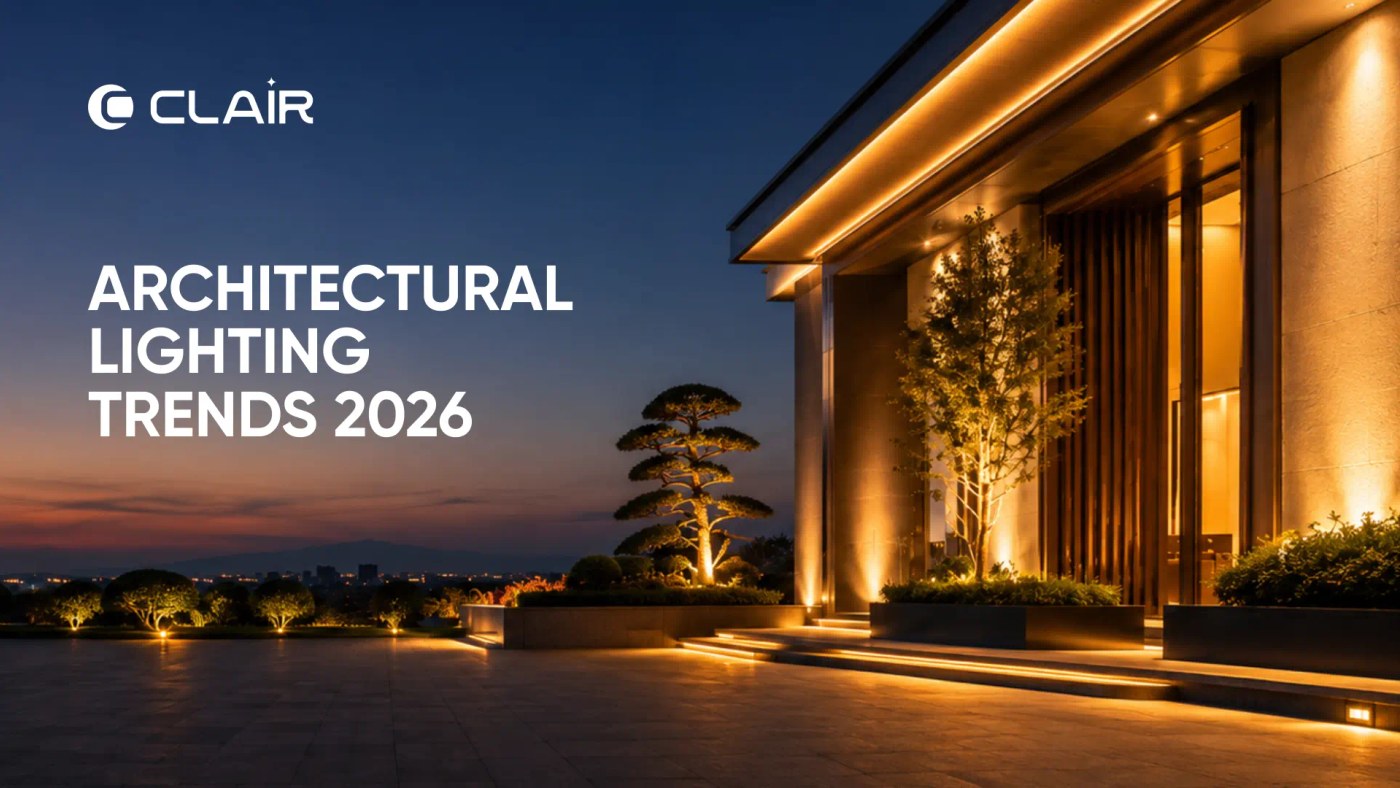
Architectural lighting trends in 2026 are moving beyond basic illumination. Commercial spaces now need lighting that supports design, energy efficiency, user comfort, brand experience and long-term performance.
In offices, lighting affects productivity and screen comfort. In retail spaces, it influences how products look and how customers move. In hotels, restaurants and lounges, it shapes ambience. In hospitals, schools and public spaces, it supports safety, visibility and comfort. This is why lighting has become a core part of commercial design planning.
At Clair, we see this shift clearly. Lighting is no longer a final electrical decision. It is a design and performance decision that affects the way a commercial space works every day.
1. Human-Centric Lighting Is Becoming More Important
One of the biggest architectural lighting trends for 2026 is human-centric lighting. This approach looks at how light affects people, not just how it lights a room.
Human-centric lighting considers brightness, glare, colour temperature, timing and comfort. In commercial spaces, this is especially important because people spend long hours working, shopping, studying, waiting or moving through built environments.
For example, an office may need neutral white lighting for active work areas, softer lighting for lounges and carefully controlled lighting for meeting rooms. A hospital may need clear visibility without harsh glare. A school may need consistent classroom lighting that supports reading and writing.
2. Layered Lighting Is Replacing Flat Lighting
Commercial spaces are moving away from one flat layer of ceiling lighting. In 2026, designers are using layered lighting to create depth, comfort and purpose.
Layered lighting usually includes three levels:
Ambient lighting for general illumination
Task lighting for focused activities
Accent lighting for highlights, walls, displays or visual interest
This matters because different areas within the same commercial space need different lighting. A retail store may need ambient lighting for movement, accent lighting for product displays and task lighting at billing counters. A restaurant may need soft ambient lighting, table-focused light and feature lighting for walls or bar areas.
Flat lighting can make a space feel dull even when it is bright. Layered lighting helps a commercial interior feel more intentional, useful and complete.
For architects, interior designers and project teams, Clair offers lighting options across downlights, COB lights, track lights, linear lights, surface lights and outdoor solutions to support application-wise planning.
3. Smart Lighting Controls Are Moving Into Everyday Projects
Smart lighting is no longer limited to luxury or experimental spaces. In commercial projects, lighting controls are becoming more practical and expected.
Smart lighting systems can help control brightness, timing, dimming, occupancy-based use and daylight integration. In offices, this can help reduce unnecessary energy consumption. In hospitality, it can support different moods across the day. In retail, it can help adapt lighting for displays, seasonal layouts or operating hours.
Lighting controls are also useful for large spaces such as malls, schools, institutions, hospitals and campuses where manual control can become difficult.
The trend is simple: commercial lighting is becoming more responsive. The light should not just switch on. It should support how the space is used.
4. Energy Efficiency Is Still a Major Design Driver
Energy efficiency continues to be one of the most important commercial lighting trends in 2026. Commercial spaces often operate for long hours, so lighting has a direct impact on electricity use and maintenance cost.
LED lighting has already changed how businesses think about energy consumption. But the next stage is not just switching to LED. It is choosing better-quality LED products, efficient drivers, suitable wattage, correct lumen output and lighting layouts that avoid over-lighting.
For commercial projects, energy-efficient lighting should not mean compromising on experience. A well-planned lighting system can reduce power consumption while still supporting visibility, ambience and visual comfort.
Clair’s LED lighting range is designed to support this balance across offices, retail spaces, institutions, industrial spaces and outdoor areas.
5. Minimal and Integrated Lighting Is Growing
In many commercial interiors, lighting is becoming more architectural and less visually heavy. Designers are using concealed lighting, linear profiles, recessed fixtures, cove lighting and clean downlights to make the space feel refined.
This trend is especially visible in offices, showrooms, retail stores, hotels, clinics and premium commercial interiors. Instead of making every fixture stand out, designers often want lighting that blends into the ceiling, walls, joinery or architectural details.
Integrated lighting helps create cleaner lines and better visual continuity. It can also help highlight materials, textures, display zones and movement paths without making the ceiling feel crowded.
However, minimal lighting still needs proper planning. A space can look clean but still perform poorly if brightness, glare, beam angle and colour temperature are not planned correctly.
6. Retail and Hospitality Lighting Is Becoming More Experience-Led
Retail and hospitality spaces are using lighting as part of brand experience. In 2026, commercial lighting is not just about helping people see. It is about helping people feel, explore and remember the space.
In retail, lighting affects how products look. Colour rendering, spotlighting, display lighting and contrast can change how customers perceive merchandise. In hospitality, lighting affects comfort, warmth, privacy and mood.
A café, showroom, salon, boutique and hotel lobby cannot use the same lighting strategy. Each space needs lighting that supports its customer journey.
Good lighting can guide attention, create comfort, improve photographs, support brand identity and make interiors feel more premium.
Clair’s architectural and commercial lighting range helps designers choose lighting based on application, finish and performance instead of relying only on brightness.
7. Outdoor and Facade Lighting Is Becoming More Strategic
Commercial buildings are paying more attention to outdoor lighting. Facades, entrances, pathways, parking areas, gardens, signage and public-facing zones all contribute to the first impression of a space.
In 2026, outdoor lighting needs to balance safety, visibility, energy use and aesthetics. It also needs the right protection against dust, rain, heat and outdoor conditions. This is where IP ratings, fixture quality and installation planning become important.
Outdoor lighting is especially relevant for hotels, hospitals, campuses, retail complexes, offices, schools, societies and public buildings.
A good outdoor lighting plan improves visibility and movement while also strengthening the identity of the building after dark.
8. Specification Clarity Is Becoming a Competitive Advantage
As lighting becomes more technical, architects and interior designers need brands that make specification easier.
A good lighting decision needs clarity on wattage, lumens, beam angle, CRI, CCT, IP rating, mounting type, driver quality and application suitability. Without clear specifications, the project team may struggle during selection, procurement or installation.
This matters for dealers and retailers too. A product that is easier to explain is easier to recommend. A product with clear specifications gives more confidence to architects, contractors, electricians and end customers.
At Clair, our approach is to make lighting easier to choose, easier to specify and easier to install. For commercial spaces, this clarity can make the difference between a good product and a successful project outcome.
Conclusion
Architectural lighting trends shaping commercial spaces in 2026 are focused on people, performance and design clarity. Human-centric lighting, layered lighting, smart controls, energy efficiency, integrated fixtures, experience-led interiors, outdoor lighting and specification clarity are all becoming more important.
For commercial spaces, lighting is no longer just about visibility. It affects comfort, productivity, safety, ambience, energy use and the final experience of the space.
As offices, retail spaces, hospitality projects, schools, hospitals and public buildings continue to evolve, lighting needs to evolve with them.
Clair helps commercial projects choose LED lighting solutions that support design intent, application needs and long-term performance.
Explore Clair LED lighting solutions for commercial, architectural, office, institutional and outdoor spaces.
FAQs
1. What are the top architectural lighting trends in 2026?
Key trends include human-centric lighting, layered lighting, smart controls, energy-efficient LED systems, integrated lighting, experience-led retail and hospitality lighting, outdoor lighting and better specification clarity.
2. Why is layered lighting important in commercial spaces?
Layered lighting helps create depth, comfort and purpose. It combines ambient, task and accent lighting so each area of a commercial space is lit according to its function.
3. What is human-centric lighting?
Human-centric lighting is an approach that considers how light affects people’s comfort, focus, mood and daily activity. It looks beyond brightness and includes factors like colour temperature, glare and timing.
4. Why are smart lighting controls becoming popular?
Smart lighting controls help manage dimming, occupancy-based lighting, daylight use and energy savings. They are useful in offices, malls, hotels, institutions and large commercial buildings.
5. How does lighting affect retail and hospitality spaces?
Lighting affects how products look, how customers move and how a space feels. In hospitality, it helps create ambience and comfort. In retail, it can improve product visibility and brand experience.
6. What should architects check before specifying commercial lighting?
Architects should check wattage, lumens, CRI, colour temperature, beam angle, IP rating, mounting type, driver quality, warranty and application suitability.
7. Why choose Clair for commercial and architectural lighting?
Clair offers LED lighting solutions for commercial, architectural, office, institutional, industrial and outdoor applications. The focus is on making lighting easier to choose, easier to specify and easier to install.