
Company News
How LED Lighting Helps Businesses Reduce Electricity Bills
Learn how LED lighting helps businesses reduce electricity bills through lower power consumption, longer fixture life, better lighting design, controls and reduced maintenance.
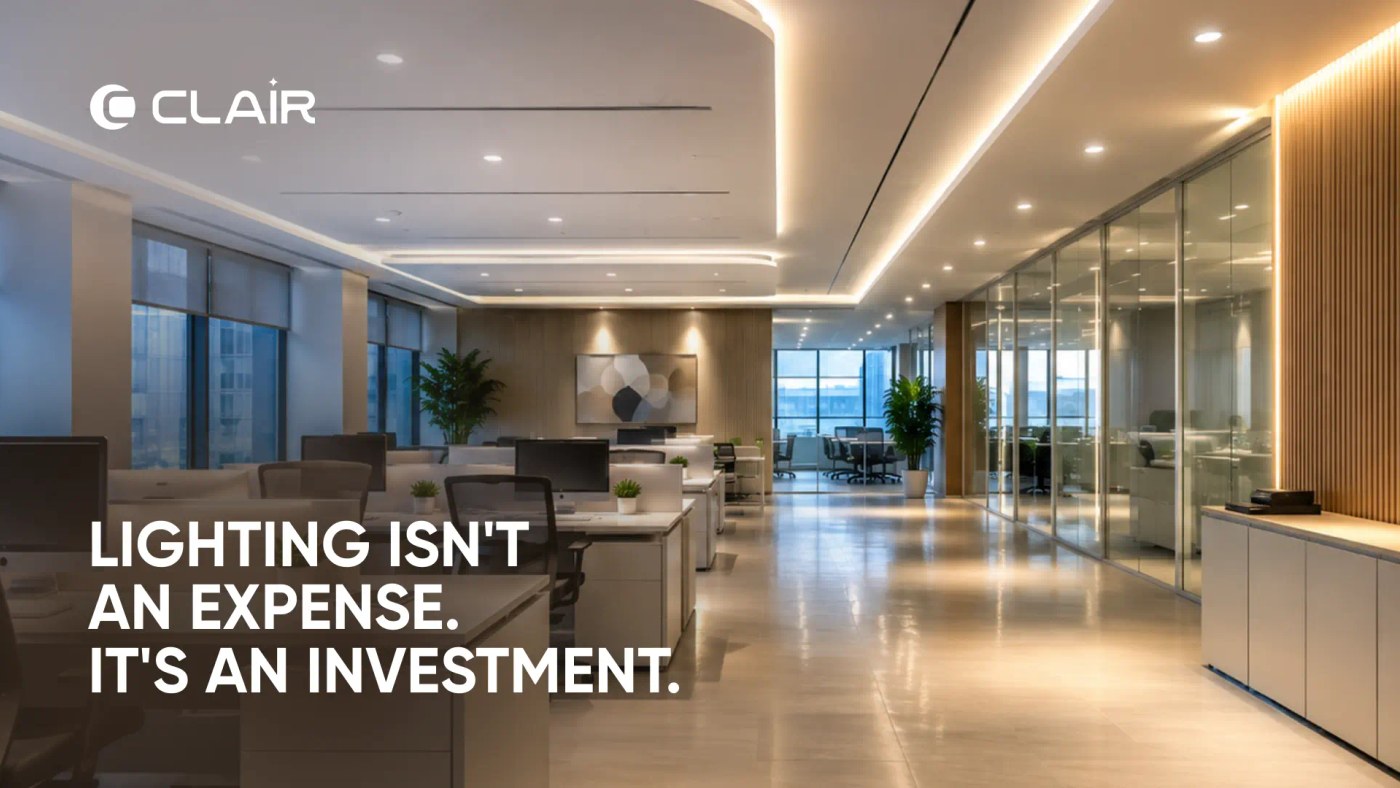
LED lighting for businesses is one of the most practical ways to reduce electricity bills without changing the way a space functions. Offices, factories, warehouses, retail stores, hospitals, schools, showrooms and commercial buildings use lighting for long hours every day. When those lights consume more power than needed, the cost shows up month after month.
Many businesses think of lighting only when a fixture fails or when a new project is being planned. But lighting has a direct impact on operating cost, maintenance cost and overall space efficiency. A business that upgrades from outdated lighting to efficient LED lighting can reduce power consumption, improve visibility and lower long-term maintenance needs.
At Clair, we look at lighting as a working system. It should support the space, reduce waste and make everyday operations easier. Here are five practical ways LED lighting helps businesses reduce electricity bills.
1. LED Lights Use Less Power for the Same Useful Light
The biggest reason businesses switch to LED lighting is simple: LED lights can produce useful brightness with lower power consumption compared to many traditional lighting options.
Older lighting systems often use more wattage to deliver the same or lower light output. In offices, this may include old fluorescent panels or tube lights. In factories and warehouses, it may include metal halide or high-wattage industrial fittings. In retail or hospitality spaces, it may include older downlights, halogen fittings or inefficient decorative lights.
LED lighting helps reduce electricity bills because it focuses on efficient light output. Instead of only looking at wattage, businesses should also look at lumen output, fixture efficiency and how much light actually reaches the working area.
For example, a commercial space does not need more lights by default. It needs the right lights in the right places. When LED products are selected properly, businesses can maintain or improve brightness while using less energy.
2. Better Lighting Design Prevents Over-Lighting
Electricity bills are not affected only by the type of light used. They are also affected by how the lights are planned.
Many business spaces are over-lit in some areas and under-lit in others. This usually happens when lighting is added without a proper layout. More fixtures are installed to solve dark patches, but the actual issue may be wrong placement, wrong beam angle, poor fixture selection or lack of uniformity.
A better LED lighting plan helps avoid unnecessary fittings. It considers room size, ceiling height, work zones, natural daylight, fixture spacing and the activity taking place in each area.
In an office, open workstations may need uniform lighting, while a reception area may need more design-led lighting. In a warehouse, aisles and storage zones may need different lighting from loading bays. In a retail space, product displays may need focused lighting, while circulation areas need comfortable ambient light.
When lighting is designed by application, businesses can reduce energy waste and improve the way the space is used.
3. LED Lights Last Longer and Reduce Replacement Costs
Electricity cost is only one part of lighting cost. Businesses also spend on replacement, labour, downtime and maintenance.
Traditional lights may require frequent replacement, especially in high-use spaces. This becomes a bigger issue in factories, warehouses, schools, hospitals, offices and commercial buildings where lighting runs for long hours. Every replacement may involve product cost, electrician cost and disruption to normal operations.
Good-quality LED lighting helps reduce these repeated expenses. Longer fixture life means fewer replacements and lower maintenance planning. This is especially useful in areas where lights are difficult to access, such as high ceilings, warehouses, parking areas, outdoor poles, facades and industrial spaces.
For businesses, this creates better lifecycle value. The saving is not only in the electricity bill. It is also in reduced service calls, fewer interruptions and better reliability after installation.
At Clair, our approach is to make lighting easier to trust after handover. For businesses, that means selecting lighting that supports performance, durability and long-term use.
4. Smart Controls Help Reduce Unnecessary Usage
Many businesses lose energy because lights stay on even when they are not needed.
Conference rooms, cabins, corridors, washrooms, storage rooms, parking areas and back-of-house spaces may remain lit for long periods without active use. In larger buildings, this can add up to a major part of the electricity bill.
LED lighting becomes even more effective when paired with controls such as motion sensors, timers, dimming systems or daylight-based control. These systems help ensure that lights are used when required and reduced when not required.
For example, a corridor may not need full brightness throughout the day. A meeting room does not need lights running when it is empty. A parking area may need stronger lighting during active hours and controlled lighting during low-traffic periods.
Smart lighting control is not only about technology. It is about reducing waste without affecting convenience or safety.
5. LED Lighting Improves Efficiency Across Different Business Spaces
Every business space uses lighting differently. A factory floor, a corporate office, a retail store and a hospital corridor do not have the same lighting needs. This is why energy savings depend on choosing the right LED solution for each environment.
In offices, efficient LED panels, downlights and linear lights can reduce consumption while supporting visual comfort. In factories and warehouses, high bay lights and industrial fixtures can provide strong illumination with better energy use. In retail stores and showrooms, track lights and COB downlights can improve product visibility without unnecessary power waste. In outdoor areas, efficient street lights, flood lights and facade lights can support safety and visibility while controlling energy use.
The key is not just switching to LED. The key is switching to the right LED lighting for the space.
This is where specification matters. Businesses should check wattage, lumens, colour temperature, CRI, IP rating, beam angle, driver quality and warranty before making a decision. A cheaper product may reduce purchase cost, but poor performance, early failure or wrong application can increase long-term cost.
At Clair, we focus on lighting solutions that are easier to choose, easier to specify and easier to install across commercial, industrial, institutional, office and outdoor spaces.
How to Estimate LED Lighting Savings for Your Business
Before upgrading, businesses should do a simple lighting review. This helps understand where electricity is being used and where savings are possible.
Start by checking:
Number of existing fixtures
Wattage of each fixture
Average operating hours per day
Areas where lights stay on unnecessarily
Existing maintenance and replacement frequency
Spaces with poor visibility or over-lighting
Current electricity tariff
Areas where controls or sensors can help
Once this information is clear, it becomes easier to compare current consumption with a proposed LED lighting plan. The return on investment depends on operating hours, fixture quality, energy savings, maintenance savings and installation cost.
For large offices, factories, warehouses, schools, hospitals and commercial spaces, even a small wattage reduction per fixture can create significant savings over time because the lights operate daily.
Looking to review your lighting cost? Connect with us to explore LED lighting solutions based on your business space, usage and application needs.
Conclusion
LED lighting helps businesses reduce electricity bills in more than one way. It lowers power consumption, prevents over-lighting, reduces maintenance, supports smart controls and improves efficiency across different types of spaces.
For businesses, lighting should not be treated as only a purchase cost. It should be seen as an operating cost decision. The right LED lighting plan can improve visibility, reduce waste, support productivity and create better lifecycle value.
Whether it is an office, factory, warehouse, retail store, institution or outdoor space, the goal should be the same: use the right amount of light, in the right place, with the right product.
At Clair, we help businesses choose LED lighting solutions that support energy efficiency, performance and long-term reliability.
Explore Clair LED lighting solutions for commercial, industrial, office, institutional and outdoor spaces.
FAQs
1. How does LED lighting reduce electricity bills for businesses?
LED lighting reduces electricity bills by using less power for the same useful light output. When combined with better lighting design and controls, it can also reduce unnecessary usage and energy waste.
2. Is LED lighting good for offices?
Yes. LED lighting is suitable for offices because it can provide uniform illumination, better visual comfort, lower power consumption and reduced maintenance compared to many older lighting systems.
3. Can LED lights help factories and warehouses save electricity?
Yes. Factories and warehouses often use lighting for long hours and large areas. Industrial LED lights such as high bay lights, flood lights and linear lights can help reduce consumption while maintaining visibility and safety.
4. What should businesses check before switching to LED lights?
Businesses should check wattage, lumens, colour temperature, CRI, IP rating, fixture type, beam angle, driver quality, warranty and whether the light is suitable for the intended application.
5. Do LED lights reduce maintenance costs?
Good-quality LED lights generally have longer fixture life and lower replacement frequency. This helps businesses reduce maintenance costs, especially in large spaces or hard-to-access areas.