
Lighting Guides
How to Protect LED Lights During Monsoon : Safety Tips and Guides
Learn how to protect LED lights during monsoon with safety tips for homes, offices and outdoor spaces. Understand IP ratings, wiring checks, moisture protection and surge safety.
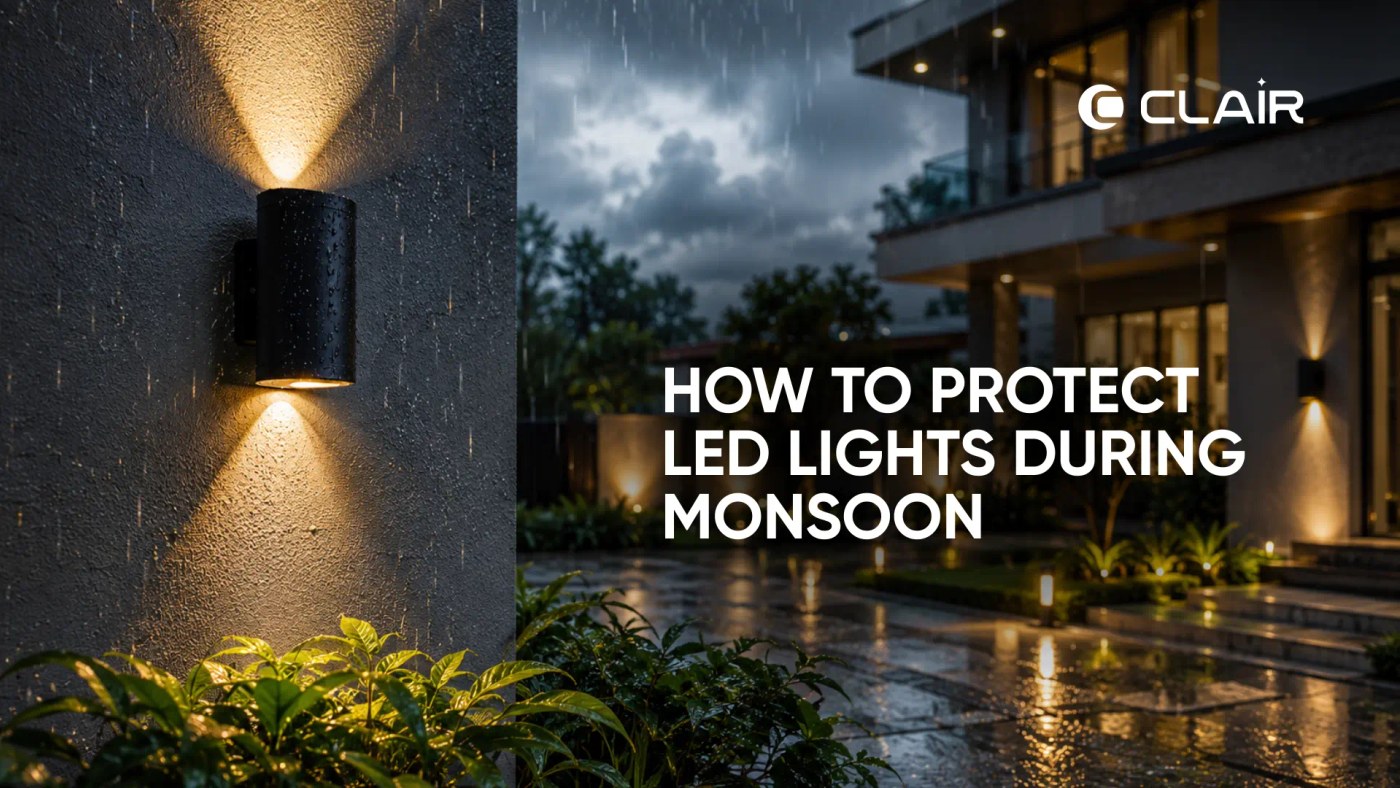
Knowing how to protect LED lights during monsoon is important for homes, offices, shops, schools, housing societies and outdoor spaces. Rain, humidity, leakage, waterlogging and voltage fluctuations can affect lighting performance if the fixtures, wiring and installation are not planned properly.
LED lights are generally energy-efficient and long-lasting, but they still need the right protection for the place where they are installed. A ceiling light inside a dry bedroom does not face the same conditions as a balcony light, garden light, facade light, parking area light or outdoor streetlight. During monsoon, moisture and electrical safety become more important, especially in exposed or semi-exposed areas.
At Clair, we look at lighting as part of how a space functions every day. In the rainy season, good lighting is not only about brightness. It is also about protection, safety, durability and the correct product for the correct application.
Why Monsoon Can Affect LED Lights
The monsoon season brings moisture into spaces in many ways. Rainwater can enter balconies, terraces, gardens, parking areas, outdoor walls and poorly sealed junction boxes. Indoor spaces can also be affected through seepage, damp walls, condensation and humidity.
LED lights may be affected during monsoon because of:
Water entering unsuitable fixtures
Loose wiring or exposed connections
Moisture around switchboards or junction boxes
Corrosion in outdoor fittings
Voltage fluctuations during heavy rain or storms
Poor-quality drivers or low-protection fixtures
Incorrect product selection for wet or outdoor areas
Not every lighting problem appears immediately. Sometimes a fixture may start flickering, dimming or failing after repeated moisture exposure. In other cases, the issue may be with the wiring, earthing or installation rather than the LED light itself.
That is why monsoon lighting safety should begin before the problem becomes visible.
Check the IP Rating Before Installing Outdoor Lights
One of the most important things to check for outdoor LED lights is the IP rating. IP stands for Ingress Protection. It indicates how well a product enclosure is protected against dust and water. The IP Code is defined under IEC 60529 and is commonly used for electrical enclosures and lighting products.
For indoor dry areas, a basic indoor fixture may be enough. But for balconies, gardens, building exteriors, terraces, parking areas, pathways, gates and other outdoor spaces, the fixture needs better protection against moisture and water exposure.
For example, a light used in a living room is not suitable for a garden wall simply because it is bright enough. Outdoor lights need to be selected for rain, dust, humidity and installation conditions.
As a basic rule, outdoor lighting should be chosen with an appropriate IP rating for the application. Areas exposed to rain, water spray or heavy dust usually need higher protection than indoor spaces.
Inspect Wiring, Switchboards and Junction Boxes
During monsoon, the fixture is only one part of the lighting system. Wiring, switchboards, junction boxes and connections are equally important.
Loose wiring, damaged insulation or exposed joints can become unsafe when moisture enters the area. Switchboards near windows, balconies, terraces or damp walls should be checked carefully. Outdoor junction boxes should be sealed properly and placed where water does not collect.
Before the rainy season, homes, offices and commercial spaces should get electrical points checked by a qualified electrician, especially if lights are installed in outdoor or semi-outdoor areas.
Important areas to inspect include:
Balcony and terrace lights
Garden and pathway lights
Parking and basement lights
Outdoor signage and facade lights
Gate and compound wall lights
Staircase and corridor lights
Switchboards near damp walls
Junction boxes exposed to rain or seepage
A good monsoon check should not be limited to whether the light turns on. It should also check whether the installation is safe, sealed and suitable for the season.
Protect Lights from Water Seepage and Damp Walls
Many lighting issues during monsoon begin with seepage. Water may not directly fall on a light, but it can travel through walls, ceilings or concealed electrical paths. Over time, this can affect fixtures, wiring and switchboards.
If you notice damp patches near a light point, switchboard or ceiling fixture, do not ignore them. The lighting problem may actually be a waterproofing or leakage problem.
Indoor LED lights installed in false ceilings, bathrooms, kitchens, basements and utility areas should be checked more carefully during monsoon. These spaces are more likely to experience humidity, leakage or condensation.
For homes and offices, preventive action can include sealing leak points, checking ceiling dampness, ensuring proper ventilation and avoiding unnecessary exposure of indoor fixtures to moisture.
At Clair, we recommend choosing lighting based on actual application conditions. A dry indoor room, a covered balcony, a bathroom, a basement and an open outdoor wall all need different levels of protection and product suitability.
Use Surge Protection Where Needed
Monsoon often brings heavy rain, lightning, tree falls, waterlogging and power interruptions. These conditions can sometimes lead to voltage fluctuations. LED lights depend on drivers and electronic components, so poor power conditions can affect performance and life.
For larger homes, offices, schools, shops, housing societies, commercial buildings and outdoor lighting systems, surge protection should be considered as part of the electrical plan. This is especially important for exterior lighting, facade lighting, street lighting, parking areas and campus lighting.
Surge protection does not replace good wiring or product quality. It works as one part of a safer electrical system.
If your lights flicker frequently during monsoon, fail after storms or trip circuits often, it is better to get the wiring, load and protection devices checked by a professional.
Clair lighting solutions are built with application, reliability and long-term performance in mind. For projects where lighting needs to perform through seasonal changes, product selection and electrical planning should go together.
Choose the Right LED Lights for Each Area
A common mistake is using the same type of LED light everywhere. During monsoon, this mistake becomes more visible.
Indoor lights, outdoor lights and wet-area lights need different specifications. A decorative indoor light may look good, but it may not be suitable for a balcony. A basic surface light may work in a dry corridor, but not in a damp basement. A normal fitting may not be the right choice for a garden, gate or terrace wall.
Here is how to think about lighting by area:
Living rooms and bedrooms need indoor LED lights suited for dry use.
Bathrooms and utility areas need fixtures planned with moisture in mind.
Balconies need lights suitable for semi-outdoor exposure.
Gardens and pathways need outdoor-rated lighting.
Parking areas need durable, efficient and properly protected fixtures.
Offices and schools need safe, uniform and low-maintenance lighting.
Facades and exterior walls need fixtures selected for weather exposure.
Good lighting selection begins with the question: where will this light be installed?
Clean and Maintain Outdoor Fixtures
Outdoor LED lights need basic maintenance during and after monsoon. Dust, mud, leaves, insects and water stains can reduce light output or affect the fixture surface. Outdoor fixtures should be cleaned gently with suitable methods after ensuring the power supply is switched off.
Do not open fixtures during rain or when the surface is wet. Avoid using harsh chemicals or high-pressure water directly on fixtures unless the product is specifically designed for that condition.
After heavy rain, check if any outdoor light is flickering, dimming, heating unusually or showing signs of water entry. If there is visible moisture inside the fixture, switch it off and get it inspected.
For societies, offices, schools and commercial buildings, lighting maintenance should be part of the monsoon checklist. Common areas such as parking, staircases, corridors, gardens and entrances need reliable lighting for safety and movement.
Do Not Ignore Flickering or Frequent Tripping
Flickering lights during monsoon should not be dismissed as a normal rainy-season issue. Flickering can happen because of moisture, loose wiring, driver problems, voltage fluctuations or poor fixture quality.
Similarly, if a lighting circuit trips frequently, there may be leakage current, water entry, damaged insulation or overload. These issues should be checked by a qualified electrician.
Do not repeatedly switch on a light that trips, sparks, smells burnt or shows visible damage. Turn it off and arrange an inspection.
Electrical safety during monsoon is not only about protecting products. It is also about protecting people using the space.
Monsoon Safety Tips for LED Lights
Before and during monsoon, follow these simple lighting safety tips:
Check outdoor lights before heavy rains begin.
Use the right IP-rated fixtures for outdoor areas.
Keep switchboards and electrical points away from water.
Get exposed wiring repaired immediately.
Avoid touching switches or appliances with wet hands.
Do not ignore flickering, tripping or burning smells.
Check damp walls near lighting points.
Ensure junction boxes are properly sealed.
Use qualified electricians for inspection and repair.
Plan surge protection for larger or outdoor lighting systems.
These steps can help reduce the risk of lighting failure, electrical hazards and unnecessary maintenance during the rainy season.
For homes, offices and institutions planning a lighting upgrade, our team can help identify suitable LED lighting solutions based on indoor, outdoor and application-specific requirements.
Conclusion
Protecting LED lights during monsoon begins with choosing the right product for the right location. Rain, moisture, seepage and power fluctuations can affect lights if the fixture, wiring and installation are not suitable for the environment.
For indoor spaces, check for dampness, leakage and safe wiring. For outdoor spaces, focus on IP-rated fixtures, sealed connections and proper installation. For offices, schools, societies and commercial buildings, make lighting maintenance part of the pre-monsoon safety plan.
Good lighting should work reliably through changing seasons. It should support visibility, safety, energy efficiency and long-term performance.
At Clair, we build lighting solutions for the spaces where India lives, works, studies and moves. Whether it is a home, office, institution, outdoor area or commercial project, the right LED lighting can help make monsoon safer, clearer and more dependable.
Explore Clair LED lighting solutions for homes, offices, institutions and outdoor spaces.
FAQs
1. How do I protect LED lights during monsoon?
To protect LED lights during monsoon, check wiring, use suitable IP-rated fixtures for outdoor areas, seal junction boxes properly, avoid moisture near switchboards and get flickering or tripping lights inspected by a qualified electrician.
2. What IP rating is good for outdoor lights during monsoon?
The right IP rating depends on the location and level of exposure. Outdoor areas exposed to rain, dust or water spray generally need higher IP-rated fixtures than indoor dry spaces. Always choose the fixture based on where it will be installed.
3. Can rain damage LED lights?
Rain can damage LED lights if the fixture is not designed for outdoor use or if water enters through poor installation, exposed wiring or unsealed connections. Outdoor LED lights should be selected for weather exposure.
4. Why do LED lights flicker during monsoon?
LED lights may flicker during monsoon due to moisture, loose wiring, voltage fluctuations, driver issues or water entering the fixture. If flickering continues, the light and wiring should be inspected.
5. Are indoor LED lights safe for balconies or gardens?
Indoor LED lights should not be used in balconies, gardens or exposed outdoor areas unless they are specifically rated for that use. Outdoor and semi-outdoor spaces need fixtures designed for moisture and weather exposure.
6. Should I switch off outdoor lights during heavy rain?
Outdoor lights that are properly rated and correctly installed are designed to handle expected weather exposure. However, if a light is damaged, flickering, sparking or shows signs of water entry, switch it off and call a qualified electrician.
7. How often should outdoor lights be checked during monsoon?
Outdoor lights should ideally be checked before monsoon begins and again after heavy rain spells. Societies, offices, schools and commercial buildings should include outdoor lighting in their regular monsoon maintenance checklist.