
Energy Efficiency
Is Your Home Suitable for Rooftop Solar? 7 Things to Check First
Planning rooftop solar for home starts before you choose the panels.
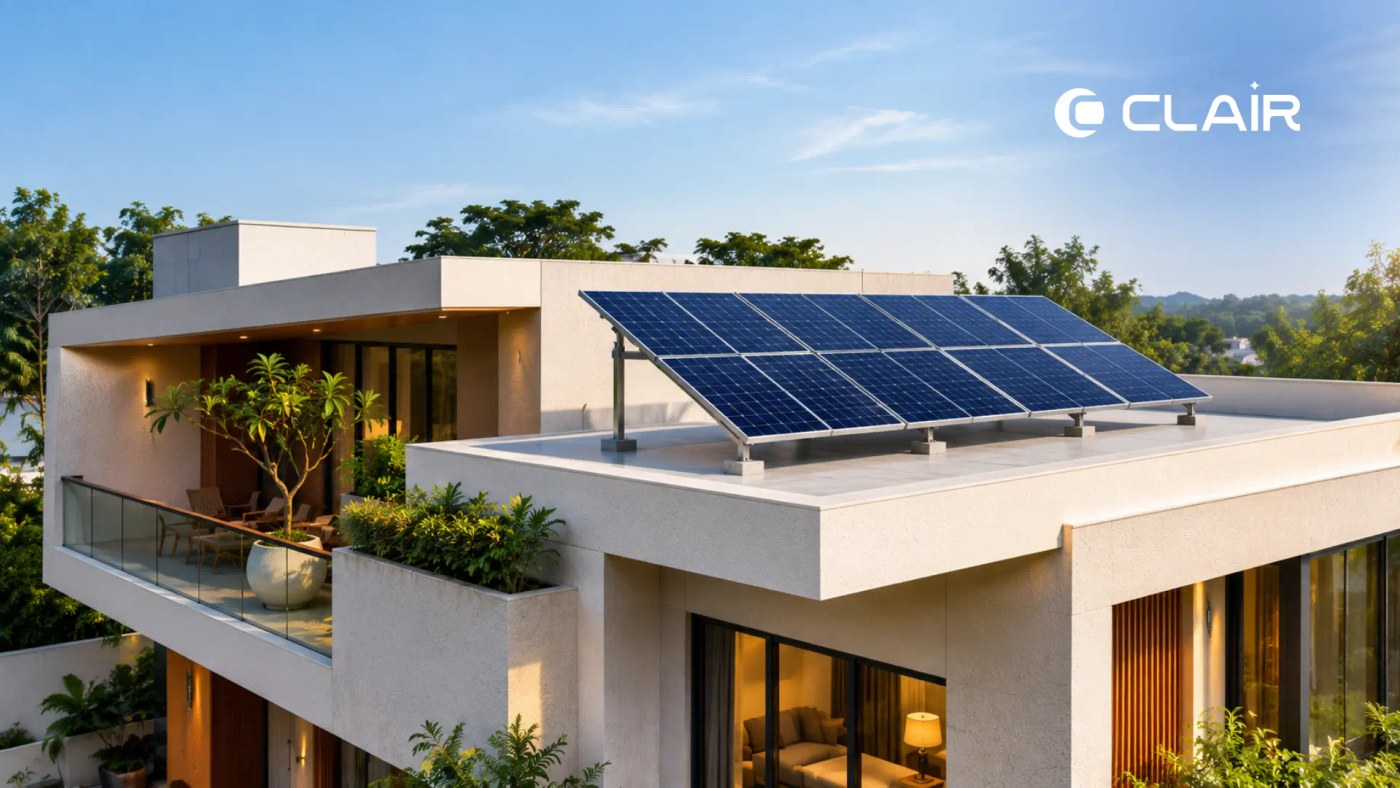
Planning rooftop solar for home starts before you choose the panels.
Your roof area, sunlight, electricity use, roof condition and existing electrical system all affect what kind of solar setup will actually work. Two homes with similar terraces may need very different systems because their shade, consumption and usable roof area can be completely different.
Before asking, “How many panels can I install?”, start with these seven checks.
1. Check The Usable Roof Area
The total size of your terrace is not the same as the area available for solar.
Water tanks, staircases, ducts, parapet walls and other structures can reduce usable space. Government rooftop solar guidance states that a 1 kW system generally requires around 10 square metres of shadow-free area, although the actual requirement varies with module efficiency and panel placement.
2. Check How Much Shade The Roof Gets
A large roof can still be unsuitable if significant parts of it remain shaded.
Trees, neighbouring buildings, water tanks and other structures can block sunlight at different times of the day. That is why rooftop solar planning should consider how shade moves across the terrace, not just how the roof looks at one particular hour.
The best area is not simply the largest area. It is the area that receives useful sunlight consistently.
Explore Residential Electrical Solutions by Clair
3. Check The Condition Of The Roof
Solar panels and their mounting structures are installed for long-term use, so the roof underneath them needs to be ready too.
If waterproofing, structural repairs or major terrace work is already required, it is better to address it before installation. The mounting structure itself is a key part of the rooftop solar system and is designed to hold the panels at an appropriate angle and orientation.
4. Understand Your Electricity Consumption
The biggest system that fits on your roof is not automatically the right system.
Look at your electricity bills and understand how many units your household typically uses. Also consider when that electricity is consumed. Homes with air-conditioning, pumps, home-office equipment or other significant daytime loads may have different solar requirements from homes with lower daytime consumption.
Future needs matter too. An additional AC, electric vehicle or new appliance could change your electricity requirement later.
5. Plan Where The Panels Will Actually Go
Panel placement affects how efficiently the available rooftop area can be used.
Orientation, tilt, surrounding obstructions and maintenance access all influence the final layout. Government guidance notes that rooftop solar mounting structures are generally designed to position panels at a suitable angle and orientation.
The objective is not to squeeze the maximum number of panels onto the terrace. It is to create a layout that works effectively and remains accessible.
6. Check The Electrical System
Rooftop solar is much more than panels.
A grid-connected system includes the inverter, mounting structure, metering and electrical components such as cables, switchboards, junction boxes, earthing, circuit breakers, fuses and lightning protection.
These components work together as one system. The inverter must suit the installation, cables must be appropriate for the application and electrical protection needs to be properly planned.
Explore Residential Illumination Solutions by Clair.
7. Check Grid And DISCOM Requirements
For a grid-connected rooftop solar system, the installation also needs to work with the local electricity network.
Metering, interconnection and DISCOM procedures need to be considered before the system is commissioned. Government rooftop solar guidelines include specific requirements for grid connection, earthing, protection and system safety.
The exact process can vary by state and local DISCOM, so it should be checked before installation begins.
Solar Is A System, Not Just Panels
The panels may be the most visible part of rooftop solar, but performance depends on the complete setup.
Your roof, sunlight, electricity requirement, inverter, cables, mounting, protection and metering all need to work together.
That is why the right question is not simply:
“Which solar panel should I buy?”
It is:
“What solar system is right for my home?”
Clair Solar Solutions
A good rooftop solar decision starts with understanding the home before installing the system.
Check the roof. Understand the load. Plan the electrical system. Then decide the capacity.
Clair Solar Solutions.Plan the system before you install the panels.
FAQs
1. How much roof area does rooftop solar need?
Government guidance states that a 1 kW rooftop solar system generally requires around 10 square metres of shadow-free area, although actual requirements can vary.
2. Does shade affect solar panels?
Yes. Shade from trees, buildings or rooftop structures can reduce the amount of sunlight reaching the panels and affect usable solar area.
3. How do I choose the right solar system size?
Start with your electricity consumption, daytime usage, available roof area and expected future requirements.
4. Is rooftop solar only about panels?
No. A complete system also includes the inverter, mounting structure, cables, earthing, protection equipment and metering.
5. Do grid-connected solar systems need DISCOM involvement?
Yes. Grid-connected rooftop solar is subject to applicable metering, interconnection and local DISCOM procedures.