
Design & Applications
Diwali Lighting in India: From Traditional Diyas to Modern LED Decor
Diwali lighting in India has always carried meaning. The festival is widely known as the Festival of Lights, and the lighting of diyas is one of its most recognised traditions.
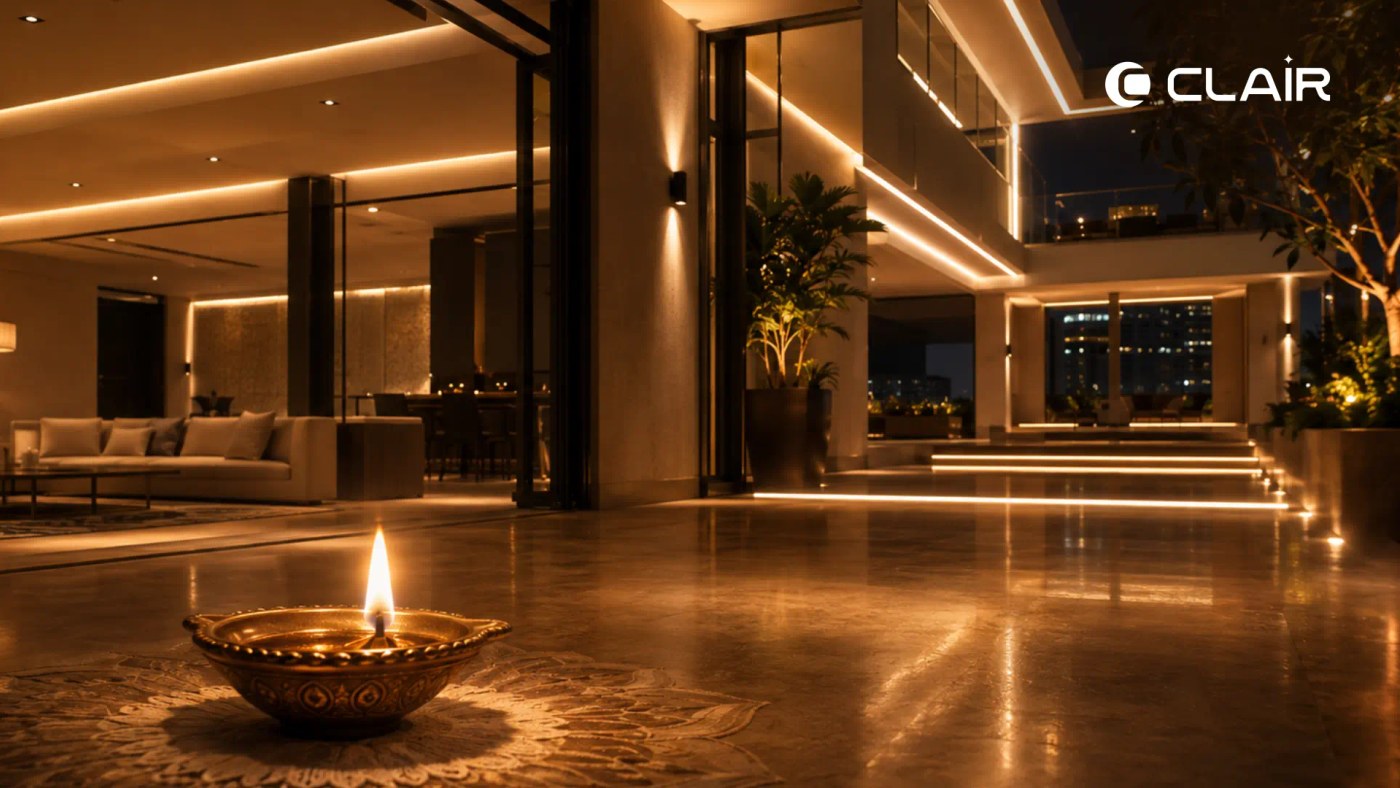
The diya remains at the heart of Diwali
Diwali lighting in India has always carried meaning. The festival is widely known as the Festival of Lights, and the lighting of diyas is one of its most recognised traditions. The Ministry of Tourism describes Diwali as a festival where families light diyas and seek blessings, while Maharashtra Tourism notes that diyas symbolise the triumph of light over darkness.
That is why the modern Diwali lighting story is not about replacing the diya. It is about how the idea of light has expanded.
The diya still holds the emotional and spiritual centre of the festival. It brings warmth to the puja room, the doorstep, the balcony and the rangoli. What has changed is the scale around it. Today, Diwali lighting spreads across homes, housing societies, shops, offices, streets, gardens, hotels, malls and public spaces.
Explore Clair lighting solutions for homes, commercial spaces and festive-ready environments.
From one flame to many layers of light
Earlier, festive lighting was built around flame-based sources: diyas, oil lamps, kandils and lanterns. These were simple, beautiful and deeply rooted in Indian homes. Over time, electric bulbs entered the festive setting and made it possible to illuminate larger areas more easily.
As Indian homes and cities changed, Diwali lighting changed with them.
Balconies began to glow with string lights. Building facades became part of the celebration. Shops used decorative lighting to attract customers during the festive shopping period. Housing societies started lighting entrances, pathways and common areas. Public spaces began using festive illumination to create a larger sense of celebration.
This changed the role of lighting from a single ritual object to a complete festive experience.
The rise of LED Diwali lights
The biggest shift in modern Diwali lighting has come through LED lighting.
LEDs made it possible to decorate more areas while using less energy compared to older lighting technologies. The U.S. Department of Energy notes that LED lighting products use at least 75 percent less energy and last up to 25 times longer than incandescent lighting.
This matters during Diwali because lighting is used for longer hours and across many areas at once. A home may use fairy lights, strip lights, lanterns, ceiling lights, balcony lights and outdoor lighting together. A commercial space may need facade lighting, display lighting, entrance lighting and parking lighting. In these situations, energy efficiency becomes a practical benefit, not just a technical point.
India’s own LED adoption story also helped make efficient lighting more familiar. Under the UJALA scheme, more than 36 crore LED bulbs were distributed across India, helping bring LED lighting into everyday household awareness.
Diwali decor is now more design-led
Modern Diwali lighting is not only about using more lights. It is about using lighting more thoughtfully.
Homes now use warm decorative lights for comfort, strip lights for edges and balconies, spotlights for corners, outdoor lights for entrances and functional LED lighting for living rooms, kitchens and puja spaces. Shops and showrooms use lighting to highlight products, guide movement and create festive appeal. Hotels, restaurants and commercial buildings use lighting to create atmosphere and visibility.
This is where lighting design becomes important.
The right colour temperature, placement and brightness can make a festive space feel warm without becoming harsh. Decorative lighting should enhance the diya, rangoli and decor, not overpower them. Outdoor lighting should improve safety while also supporting the festive look of the space.
Energy efficiency matters during festive seasons
During Diwali, lighting demand naturally increases. Homes, shops, societies and commercial areas all use additional lighting. This is where efficient LED decor and LED fixtures can reduce unnecessary energy use.
Energy-efficient Diwali lighting can help in three ways:
First, it reduces electricity consumption compared to older bulbs and decorative lights.Second, it produces less heat, which is important when lights are used for long hours.Third, it lasts longer, reducing the need for frequent replacement.
This is especially useful for housing societies, retailers, hospitality spaces and commercial buildings where festive lighting is used at scale.
However, energy efficiency should not be the only consideration. Safety also matters. Diwali lighting should be installed with proper wiring, suitable outdoor protection, good-quality products and careful load management. Outdoor decorative lights should be chosen for the conditions they will face, especially where dust, moisture or exposure may be present.
From decoration to better festive infrastructure
Diwali lighting now sits at the intersection of culture, design, safety and infrastructure.
A diya creates the feeling of Diwali. LED lighting expands that feeling across larger spaces.
This evolution reflects how India celebrates today. Tradition remains at the centre, while technology helps make the celebration larger, safer, more efficient and easier to manage.
At Clair, we see this as part of India’s larger lighting journey. Lighting is no longer only about brightness. It is about how a space feels, functions and performs.
Diwali lighting will continue to evolve
From traditional diyas to modern LED decor, Diwali lighting in India has changed with homes, cities and technology. But the purpose of light remains the same: to bring warmth, clarity, celebration and hope.
The diya will always remain the soul of Diwali.
Modern lighting simply helps that light travel further: across balconies, buildings, streets, shops, campuses and public spaces.
As festive lighting becomes more design-led and energy-efficient, the future of Diwali decor will be about balance. The warmth of tradition. The safety of good products. The efficiency of LEDs. The beauty of thoughtful lighting.
Clair is proud to be part of this evolving legacy of light.
FAQs
1. What is the importance of Diwali lighting in India?
Diwali lighting symbolises the victory of light over darkness. In Indian homes, diyas, lamps and decorative lights are used to create a festive, spiritual and welcoming environment.
2. Are LED lights good for Diwali decoration?
Yes. LED lights are suitable for Diwali decoration because they use less energy, last longer and are available in many decorative formats for homes, balconies, shops and outdoor spaces.
3. How has Diwali lighting changed over time?
Diwali lighting has moved from traditional diyas, oil lamps and kandils to electric bulbs, string lights, LED decor, outdoor lights and large-scale festive illumination for homes, societies and commercial spaces.
4. What should I check before buying Diwali LED lights?
Check product quality, wire safety, energy use, brightness, colour temperature, indoor or outdoor suitability, IP rating for exposed areas and warranty where applicable.
5. How can Diwali lighting be made more energy-efficient?
Use LED lights instead of older decorative bulbs, avoid unnecessary over-lighting, use timers where possible, choose good-quality fixtures and plan lighting according to the space.
Sources
[1] Ministry of Tourism, Utsav, Diwali festival information.[2] Maharashtra Tourism, Diwali festival page.[3] U.S. Department of Energy, Guide to Energy-Efficient Lighting.[4] Press Information Bureau, UJALA and LED distribution in India.